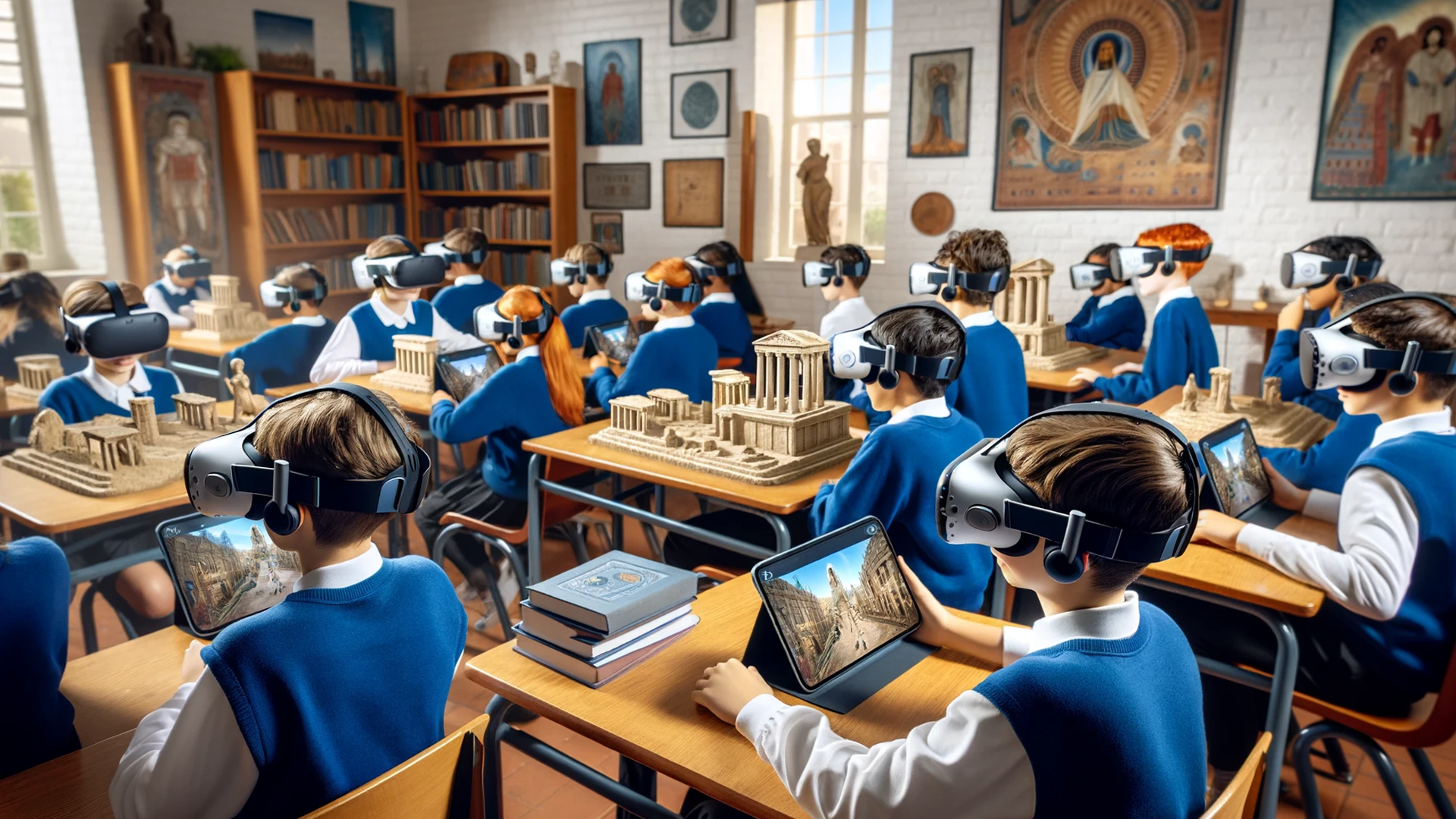

The Oculus Quest 3, the latest iteration in the line of highly acclaimed standalone virtual reality (VR) headsets, represents a significant leap forward in educational technology. With its advanced features, enhanced processing power, and wireless design, it stands poised to transform the educational landscape, offering teachers and parents an unparalleled tool for immersive learning. This article explores the capabilities of the Oculus Quest 3 and delves into the myriad ways VR can be integrated into school curriculums, enhancing both teaching and learning experiences.
Unleashing the Power of Standalone VR in Education
The Oculus Quest 3 distinguishes itself with its ease of use and accessibility, requiring no external hardware or complicated setup. This plug-and-play approach makes it an ideal tool for classroom environments, where time and resources are often limited. Its standalone nature allows for flexibility and mobility, enabling educators to bring immersive learning experiences directly to students without the need for dedicated computer labs or tethered setups.
Engaging Students Like Never Before
The immersive nature of VR technology has the power to engage students in ways traditional methods cannot. By donning the Oculus Quest 3 headset, students can be transported to virtual environments that bring abstract concepts to life. Whether it’s walking on the surface of Mars, diving into the depths of the ocean, or standing in the midst of historical events, VR offers a rich, experiential platform for exploration and discovery. This level of engagement not only enhances understanding but also fosters a deeper curiosity and love for learning.

Tailoring Learning to Individual Needs
VR’s interactive capabilities allow for personalized learning experiences, catering to the diverse needs of students. The Oculus Quest 3 can track a user’s movements and responses, adapting content in real-time to suit individual learning paces and styles. This adaptability is particularly beneficial in classrooms with mixed-ability groups, enabling teachers to provide targeted support where needed while allowing advanced learners to explore concepts more deeply.
Promoting Collaboration and Social Skills
Contrary to the misconception that VR is an isolating experience, the Oculus Quest 3 can promote collaboration and social interaction among students. Through multiplayer VR experiences and social VR platforms, students can work together on projects, solve problems, and share discoveries in a virtual space. This collaborative approach not only enhances learning outcomes but also helps develop essential 21st-century skills such as teamwork, communication, and digital literacy.
A Tool for Safe, Hands-on Experiences
Safety concerns and resource limitations often restrict the type of experiments and field trips schools can offer. The Oculus Quest 3 overcomes these barriers, providing a safe environment for students to conduct scientific experiments, practice vocational skills, or explore hazardous locations without any real-world risks. These hands-on experiences are invaluable in subjects where practical application is key to understanding.
Easing the Integration of VR in Schools
For schools looking to adopt the Oculus Quest 3, several factors can ease its integration into the curriculum. The device’s wireless design and intuitive interface make it user-friendly for both teachers and students, minimizing the learning curve associated with new technologies. Additionally, a growing library of educational VR content, developed specifically for classroom use, is readily available, covering a wide range of subjects and grade levels.
Preparing Students for the Future
Integrating the Oculus Quest 3 and VR technology into education not only enhances current learning experiences but also prepares students for the future. As digital technologies continue to shape professional landscapes, familiarity with VR will equip students with the skills and knowledge to thrive in a technologically advanced world. Moreover, the problem-solving and critical thinking skills honed in virtual environments are transferable to real-world challenges, making VR an invaluable tool for future readiness.
The Oculus Quest 3 offers an exciting opportunity to revolutionize education, providing immersive, interactive, and personalized learning experiences that traditional methods cannot match. For teachers and parents, embracing this technology opens up a world of possibilities for engaging students, enhancing understanding, and preparing them for the future. As VR technology continues to evolve, its integration into schools represents not just an advancement in educational tools but a fundamental shift in the way we approach teaching and learning.