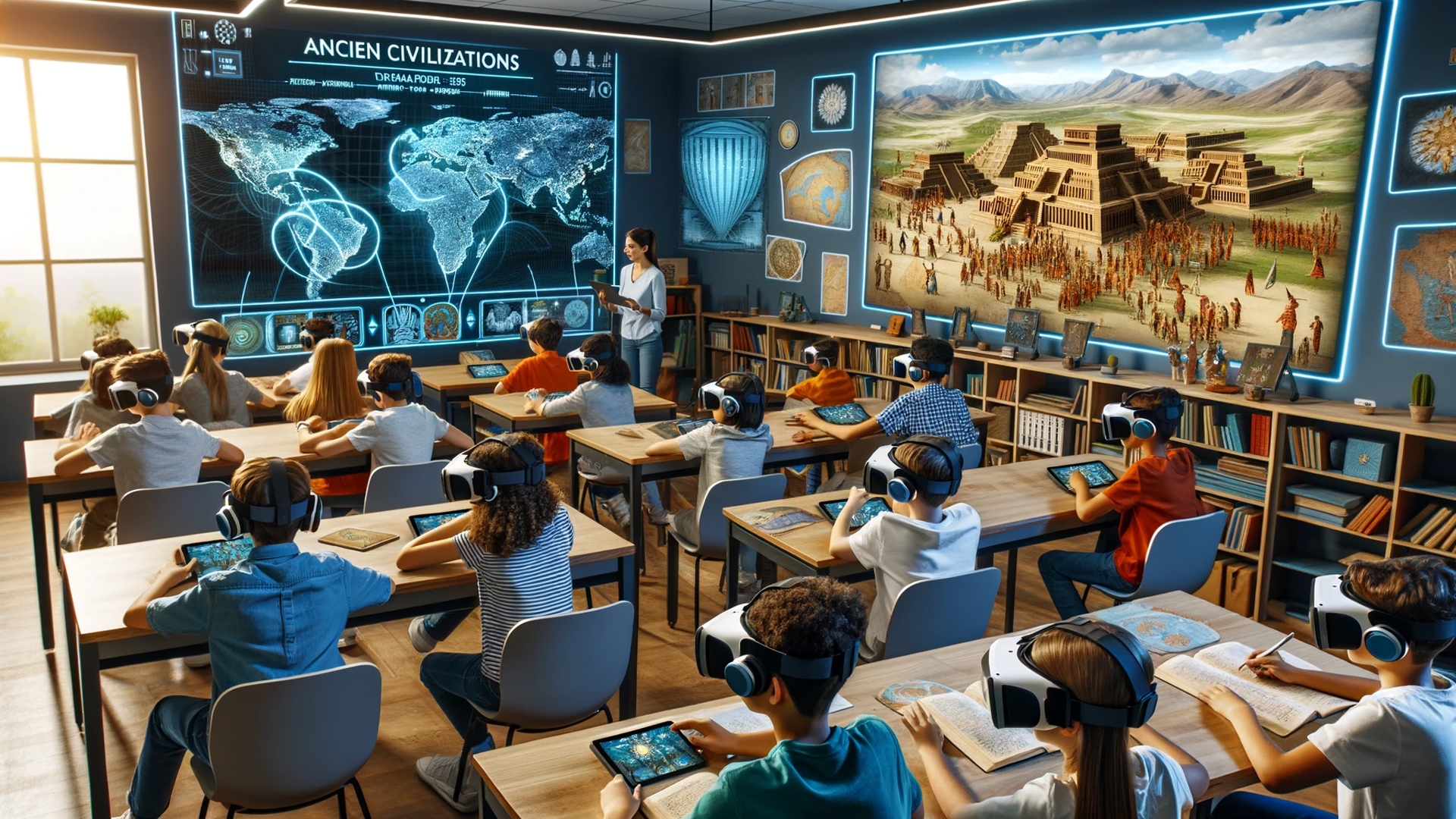

Virtual Reality (VR) is poised to dramatically transform the educational landscape, propelling us into a future where immersive, experiential learning becomes the cornerstone of teaching methodologies. As we delve into the potential that VR holds for reshaping education, it’s essential to reflect on the journey of educational technology to appreciate the pivotal role VR is set to play.
The Evolution of Educational Technology
The integration of the internet into classrooms revolutionized education, making way for a plethora of technologies that have since become integral to the learning experience. From early internet access to today’s high-speed connectivity, technology has continuously opened doors to new educational possibilities. The shift from passive learning through textbooks and lectures to interactive, tech-enabled education has set the stage for VR’s entrance into the educational sphere.
Engaging the Digital Generation
Engagement is crucial in education, and VR offers an unparalleled medium for captivating students’ attention and interest. The immersive nature of VR provides a unique platform for experiential and emotional learning, addressing the need for education to be more engaging, interactive, and relevant to students’ lives.
Experiential and Emotional Learning
Experiential learning, advocated by educational theorists like Kolb, emphasizes the importance of learning through experience. VR takes this concept to a new level by allowing students to virtually immerse themselves in environments and situations that would otherwise be inaccessible. Similarly, emotional learning, which focuses on the emotional aspects of learning, benefits from VR’s ability to create empathetic and impactful experiences.
Bridging Theory and Practice
The challenge of bringing experiential and emotional learning into the classroom has always been one of accessibility and practicality. VR offers a solution by making it easier than ever to create immersive learning experiences that engage both the mind and the emotions, facilitating deeper understanding and retention of knowledge.
Today’s VR in Education
Schools worldwide are already harnessing VR in diverse ways, from enhancing STEM education to supporting students with special educational needs. VR’s ability to simulate real-world environments and scenarios provides a dynamic learning platform that can be tailored to individual learning needs and objectives.
The Future of VR in Education
As we look to the future, VR’s role in education is expected to grow exponentially, driven by the technology’s evolving capabilities and the educational sector’s increasing willingness to adopt innovative teaching tools. The potential for VR to support lifelong learning and prepare students for future challenges is immense. By offering experiences that build core competencies, life skills, and adaptability, VR stands to equip students for success in an ever-changing world.
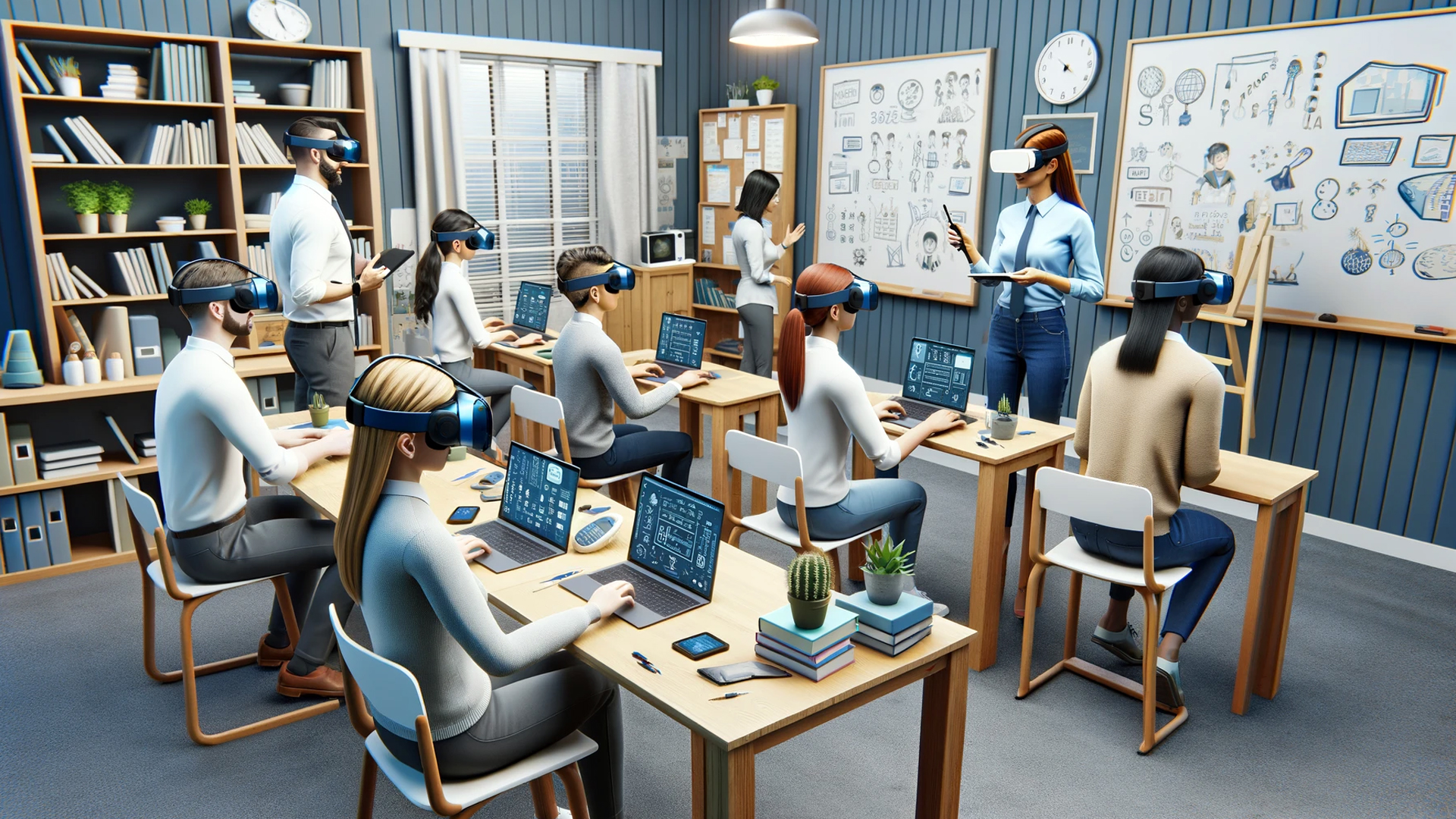
The future of education with VR promises a paradigm shift towards more immersive, engaging, and emotionally resonant learning experiences. As VR technology advances, it will continue to offer educators and students alike the tools to explore the limits of imagination and learning, making education a journey of discovery without boundaries. The integration of VR into education is not just about embracing new technology; it’s about reimagining the possibilities of what and how we learn, preparing students for a future where they are not just knowledgeable, but adaptable, empathetic, and endlessly curious.